Français

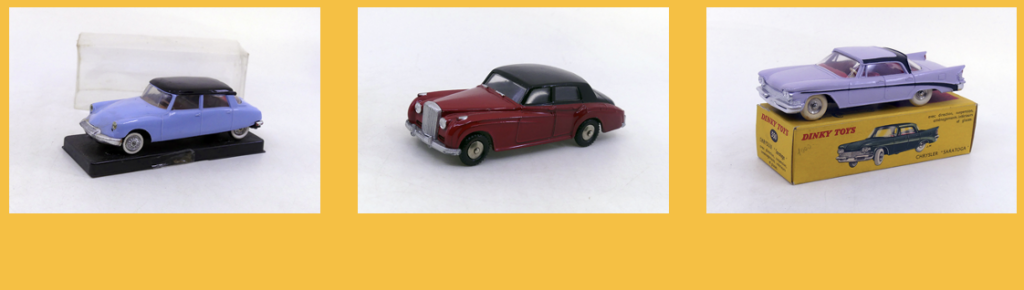
Discover a selection of models that will go on sale on our website this week, from tomorrow, Monday, October 26, through Thursday, October 29, 2026.
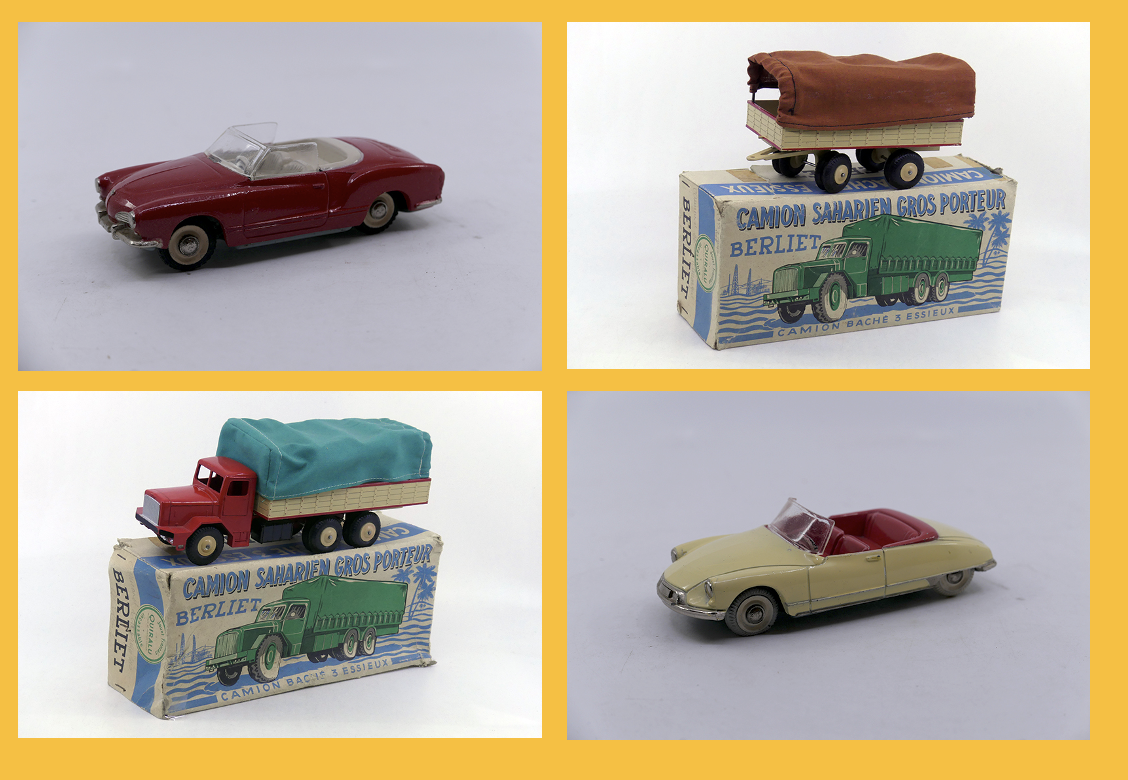
en vente cette semaine: Cherryca Phenix – Volkswagen Karmann Ghia 9 Quiralu – Berliet GBO ridelles bâché – Quiralu – Remorque ridelles bâché – Cherryca Phenix – Citroën DS19 19
I remember...
…of the “Le Bazar Dauphinois” toy store in Romans-sur-Isère.
The Rivoire family, who ran it, held sway over the entire region. Downstairs, the father expertly managed the model railway section, while the son handled the model car department.
Madame Rivoire presided over the ground floor of this large, beautiful shop, which was dedicated to toys. Dinky Toys and Solido models were displayed on this level, whereas the basement remained the domain of the grown-ups. The model car section featured brands like Rio and Eligor.
One section was devoted to construction vehicles and fine plastic model kits—notably Tamiya. Entry-level Heller kits, naturally, were found on the ground floor. Another section was dedicated to kits, including the famous John Day models.
I remember how Mr. Rivoire had cleverly displayed a few assembled models, some of which were even for sale. I would gaze longingly at these models that seemed to appear out of nowhere—items whose very existence had been unknown to me. He had warned me about the complexity of assembly, the need for special glue, and the preparation required before painting.
That dampened my enthusiasm somewhat. The presence of such products was a true measure of a store’s importance and influence within a region. For a long time, I believed that John Day, Mikansue, and Paddy Stanley were the pioneers of model car collecting. I use this term to describe faithfully reproduced miniature cars intended for serious collectors; they are no longer mere toys. They share nothing with toys other than their scale—in this case, 1:43.
These models sparked the first major debate among collectors: should these miniatures actually roll? Some say no, arguing that these aren’t toys, while others say yes, because a car is meant to move. The debate has always left me indifferent.
To create their miniatures, the manufacturers mentioned earlier used “white metal” as their raw material. This allowed them to avoid the constraints of Zamak injection molding—and the prohibitively expensive steel molds that required.
That is why I consider these products to be artisanal creations.
Later, I discovered that there was a predecessor to John Day: Accorn, also British-made. The goal was to solve a tricky equation: how to produce a unique, easy-to-assemble model in small quantities at a reasonable price. No easy feat, especially in the mid-1960s.
Accorn employed a manufacturing technique that had emerged from the world of American electric slot car racing.
In the early 1960s, a wave of manufacturers began offering thermoformed plastic bodies designed to fit standard chassis, allowing hobbyists to recreate the latest race cars on their slot tracks at various scales.
These manufacturers kept pace with current racing events—another first. Accorn adapted this concept for 1:43 scale static models. In this case, the car was formed in two parts—two clear plastic shells—which the hobbyist had to carefully cut out and paint. And the wheels?
Accorn sourced spoked wheels and axles from Dinky Toys Liverpool.
The hobbyist “simply” had to drill holes in the chassis. Needless to say, assembly was not a task for just anyone!
It is quite striking to see those transparent bodies when you open an Accorn box. It was daunting at first, and it is hard to visualize the final result.
For those who managed to overcome all the hurdles, the end result is stunning. Personally, I managed to assemble the entire range.
I appreciate this series, which marks a milestone in the history of scale models.
This week, we are looking at two examples—two Morgans, two different versions. It is hard to fully appreciate the workmanship involved just by looking at photos. Curiously, I have never come across a poorly assembled unit.
I concluded that the kit either ended up straight in the trash or fell into expert hands—and in the latter case, the result is a delight. They deserve a place in the pantheon of automotive scale model history.
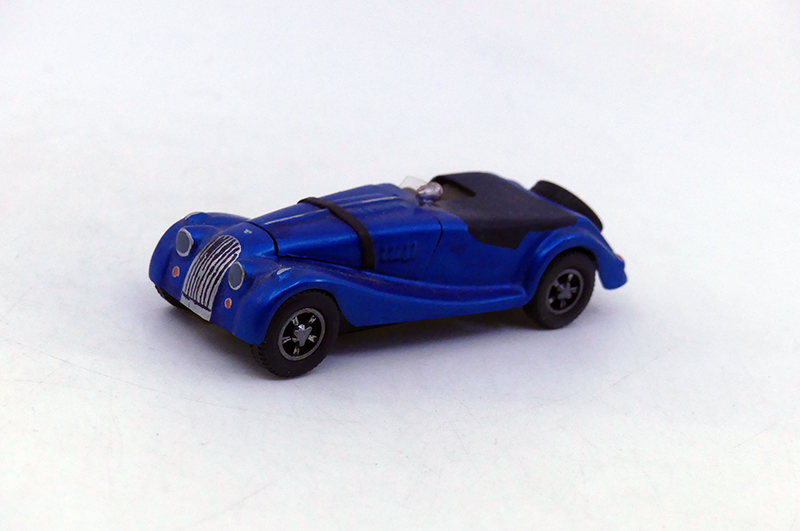
en vente cette semaine : Acorn Models – Morgan Plus 4 ref1
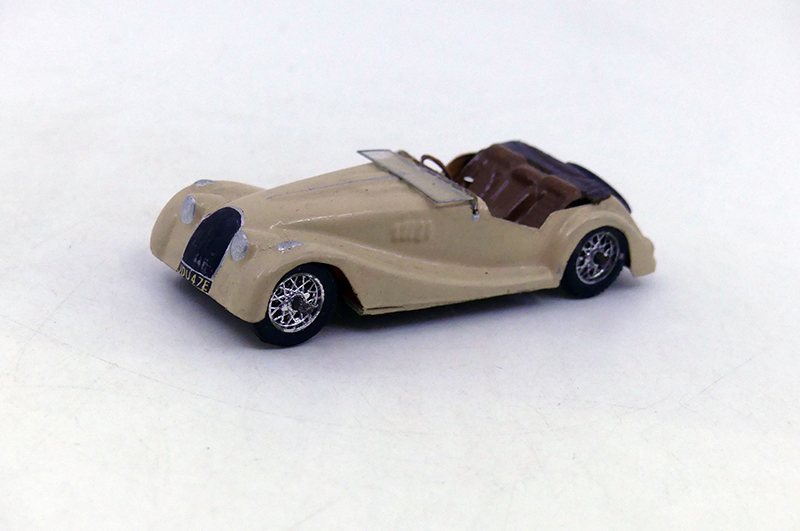
en vente cette semaine : Acorn Models – Morgan Plus 4 ref 1
I also have a keen interest in the Ferrari 166 produced by Mr. Evrat for Eligor, which is also part of the lineup. It was a short-lived product, as Mr. Greilsamer quickly discontinued it. Cast in resin, the model has aged well.
The Peugeot Darl’mat, also included in the range, dates from slightly later than the Ferrari. It is made of white metal.
It appeared in the initial catalog, but manufacturing constraints and costs ultimately put an end to its brief run. It is a fine model that I recommend to enthusiasts who appreciate something out of the ordinary. And besides, what a beautiful car.
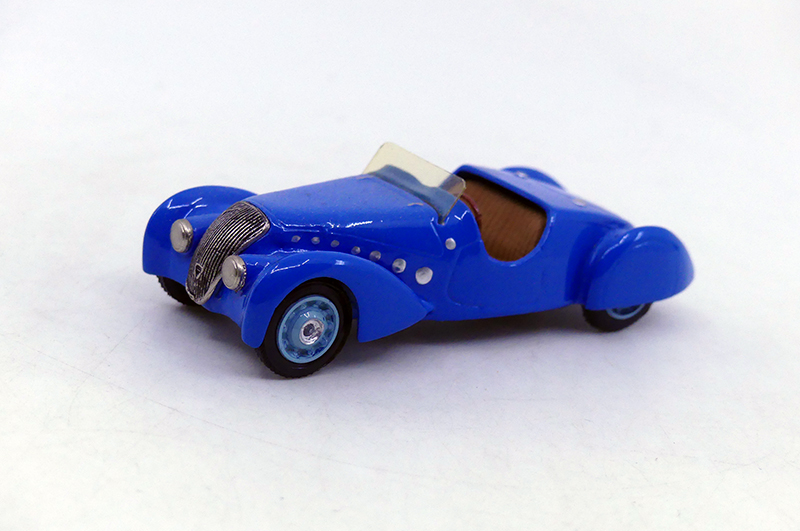
modèle en vente cette semaine : Eligor – Peugeot 302 Darl Mat 1033
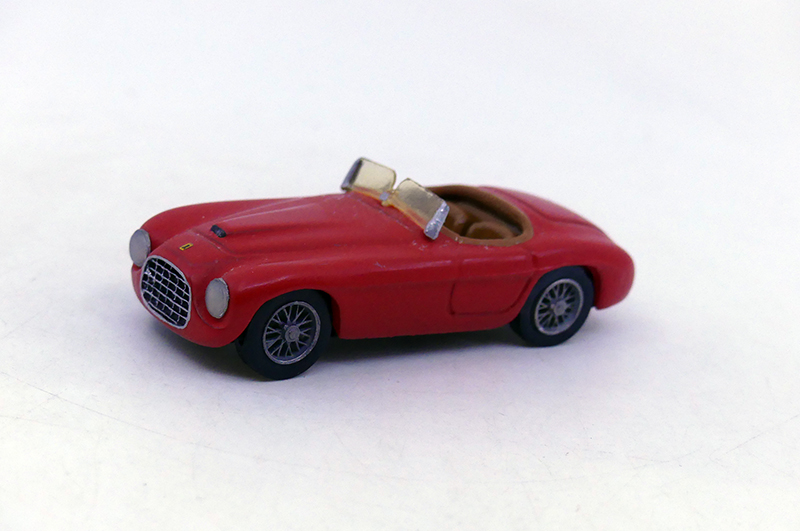
modèle en vente cette semaine : Eligor – Ferrari 166MM 2004
The two AMRs—also on the agenda—represent a later stage in the lineup. AMR was a significant manufacturer in its own right. This artisan brand, which vanished all too soon, was defined by quality and a quest for perfection.
I sometimes wonder what he would be doing in 2026 had he not left this world so prematurely.
How would he have responded to mass-produced models from Asia? The Cadillac 62 and the Ferrari 250 stand as two key milestones in his career.
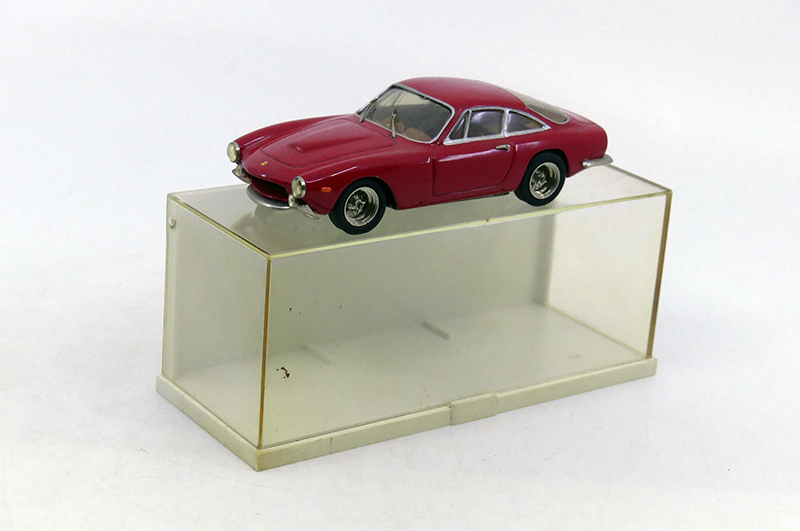
modèle en vente cette semaine : AMR – Ferrari 250GT Lusso 448
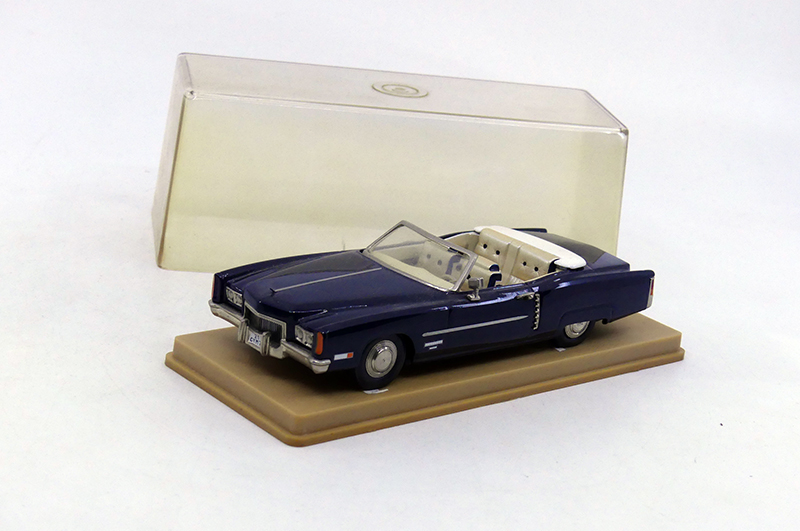
modèle en vente cette semaine : AMR – Cadillac Eldorado 1971 484
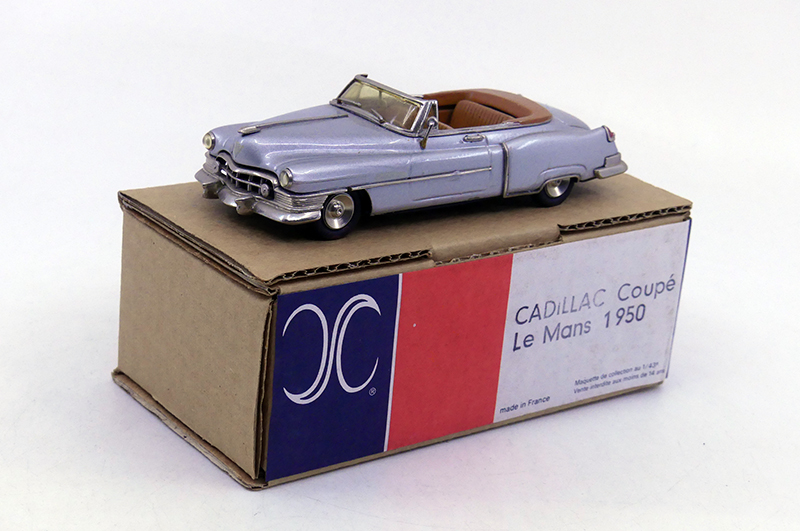
modèle en vente cette semaine : AMR – Cadillac 61 cabriolet 1950 004
fun tow truck
Toy manufacturers quickly grasped the appeal of including a tow truck in their product lines, especially since it seemed easy to create one by modifying an existing vehicle model.
Often, all that was required was a pickup truck body in the catalog—an approach that mirrored real-life practices.
For a long time, garage owners cobbled together their own tow trucks—with varying degrees of success—using vehicle bodies, sometimes salvaged from wrecks.
As a child of about six, I would pass a garage every morning on my way to school—the kind of place Jacques Demy would have loved, with its rounded entrance—where a modified Renault Prairie took pride of place.
I remember the hoist and the metal chains. The car must have originally been a petrol-blue color. That vehicle made a lasting impression on me; later, once I became a collector, I always retained a fondness for that specific car and for tow trucks in general.
The challenge for manufacturers lies in designing a toy that is both simple and sturdy, bearing in mind that children will want to recreate the scenes they have witnessed on the street. This week, we look at three examples.
The Norev Land Rover is magnificent and brilliantly designed. Norev simply removed the pickup bed’s tailgate to accommodate the crane—a simple yet effective solution. The color of this particular version suits the model perfectly, and it is a rare find within the Norev range.
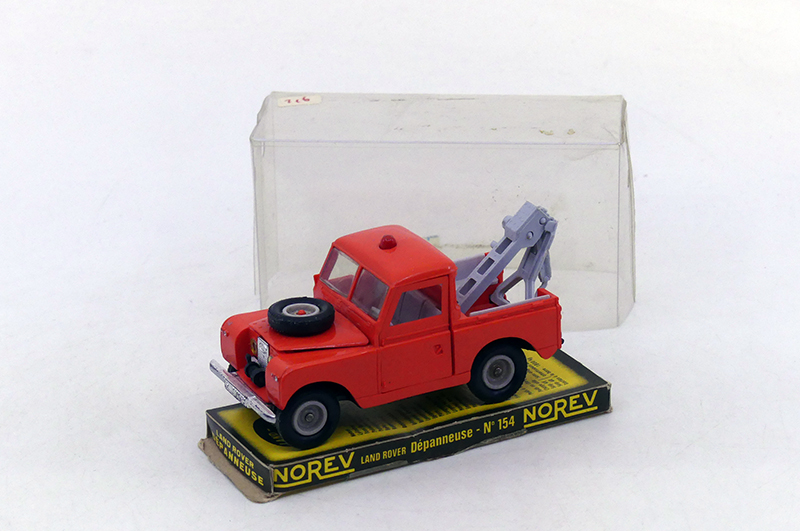
modèle en vente cette semaine : Norev – Land Rover 109 dépanneuse 154
The second model in the lineup, offered by Marx, shares the same color as the Norev version.
It is also a Land Rover, but this time the manufacturer reproduced a long-wheelbase model.
Like any manufacturer looking to maximize the return on its tooling, Marx used an existing mold. Authenticity took a back seat.
In any case, this is a toy we are dealing with. The object itself is unique. It adopts the concept pioneered by the Ideal company: a detachable plastic chassis—shared across the entire range—equipped with an electric motor and a battery compartment. It fits all the models.
A child can thus swap the body of their Mercedes 230SL for that of the Land Rover tow truck, for instance.
This explains the Land Rover’s somewhat exaggerated wheelbase, as well as why the cars are produced at slightly different scales. It is an ingenious and original design.
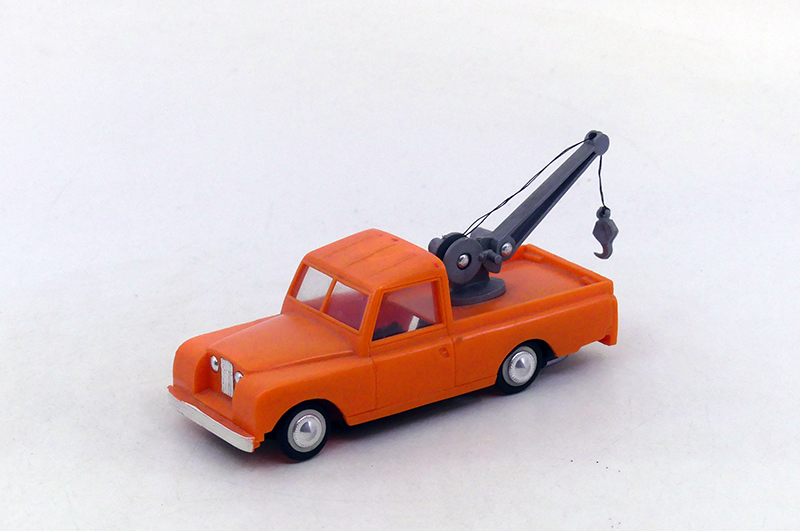
modèle en vente cette semaine: Marx – Land Rover 109LWB dépanneuse
Finally, we have a lovely Fiat Campagnola from Mercury.
It may well be the last “fine” model Mercury produced; the Turin-based venture came to an end in 1978. I appreciate its color—orange again—as well as its authentic “ACI” livery. The design of the hoist mechanism is excellent. When the factory closed, the tooling for this beautiful miniature was acquired by Old Car, proving that it was a high-quality reproduction.
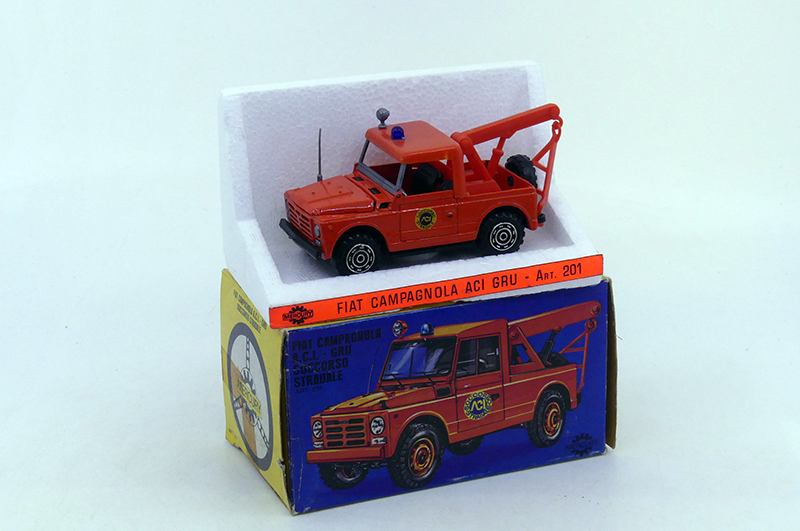
modèle en vente cette semaine : Mercury – Fiat Campagnola dépanneuse ACI 201
the aura
An analysis of the history of miniature car manufacturing reveals the dominance of certain carmakers, as reflected in the choices made by toy manufacturers.
Take 2026, for instance: which toy manufacturer has an Alfa Romeo in its catalog? It becomes clear that the carmaker has lost its prestige.
Toy manufacturers’ catalogs thus serve as a gauge of a carmaker’s health.
This thought crossed my mind when I saw all the Alfa Romeos scheduled for release this week—back in the fifties and sixties, they were plentiful.
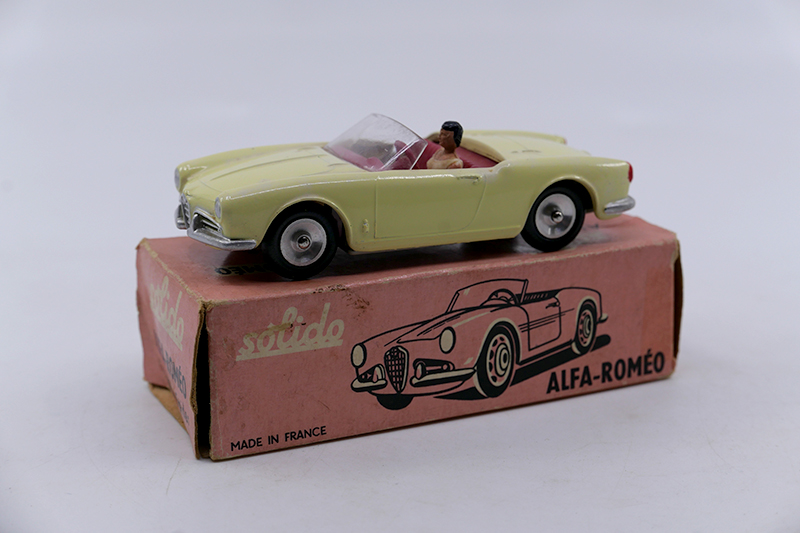
modèle en vente cette semaine : Solido – Alfa Romeo Giuletta 106 jaune
This week, we have three splendid Giulietta Spiders. Recently, an Italian client corrected me when I used the word “cabriolet.”
Solido has a long history with Alfa Romeo and has produced numerous models.
We even have *the* rare color: pale yellow. It may not be the shade that suits the car best, but it is certainly the rarest. It seems to have been borrowed from the contemporary Peugeot 403.
Solido delivered a little masterpiece. I appreciate the handling of the lines and, above all, the detailing of the grille. Compare this model with what was being produced at the time, and you will appreciate it all the more.
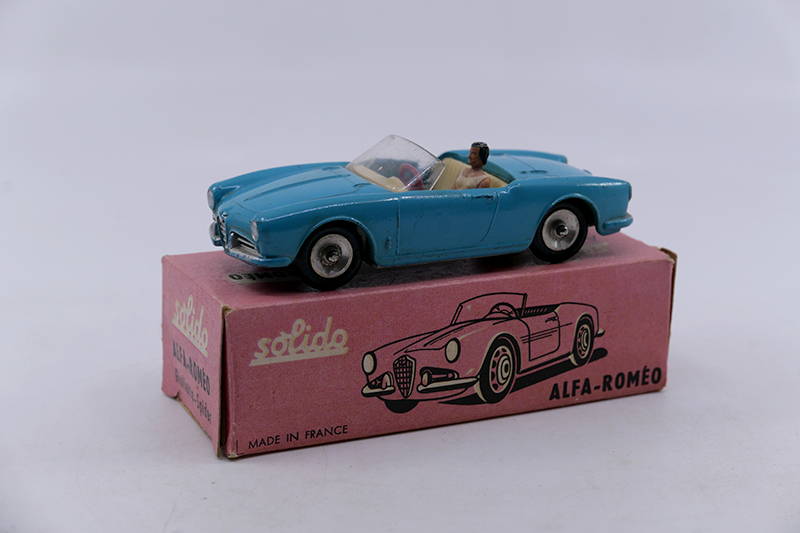
en vente cette semaine : Solido – Alfa Romeo Giulietta Cabriolet 106 bleu
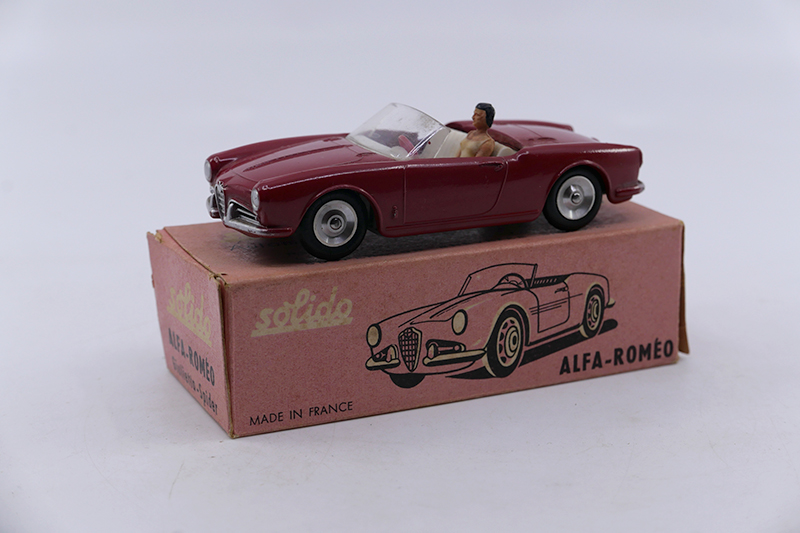
en vente cette semaine : Solido – Alfa Romeo Giulietta cabriolet 106 rouge
Politoys, a manufacturer based in Milan, also featured numerous Alfa Romeo models in its catalog.
The Giulietta sedan is faithfully reproduced.
The color of the model shown here is quite rare. I particularly appreciate the fact that the box is included.
For this type of product—intended to be sold at a low price point—the presence of the packaging is significant.
The cardboard used is fragile and has often not held up well over time. I have always drawn a parallel with the plastic Norev models from the same era.
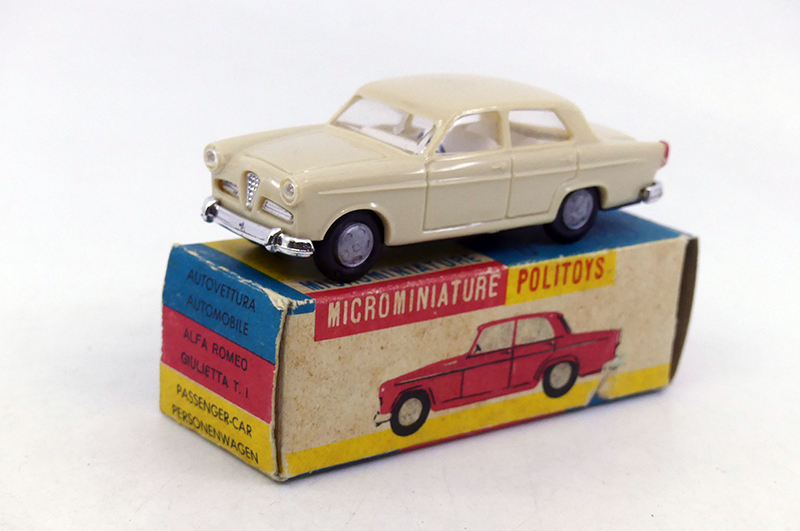
en vente cette semaine : Politoys – Alfa Romeo Giulietta TI 32
Finally, we have a beautiful and uncommon Giulia sedan from Mercury.
It marks the swan song for the Turin-based manufacturer. The detailing is not as fine as that of the earlier models, yet the car possesses a certain air of distinction.
This may be due to the fact that it is reproduced at a scale slightly larger than 1:43. I base this observation on its contemporary rival from Dinky Toys France, which was produced at 1:43 scale.
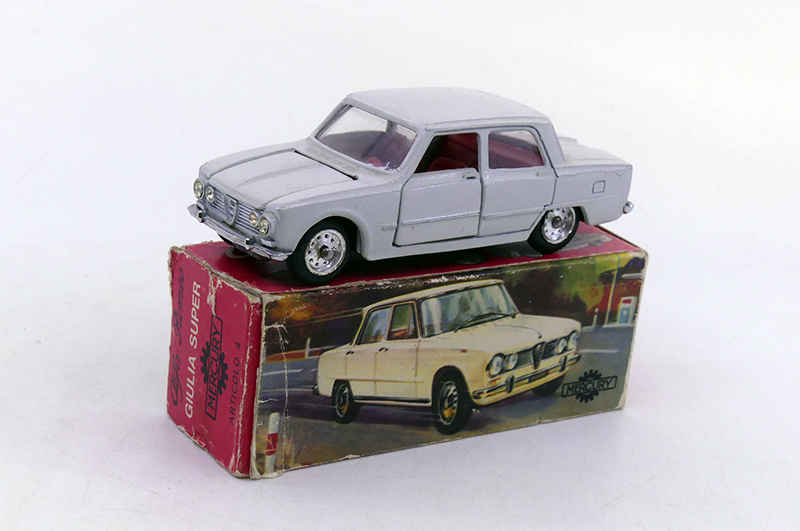
modèle en vente cette semaine : Mercury – Alfa Romeo Giulia super 4
My top pick, without hesitation, is the Railton Mobil from Kabo.
From the very beginning of our collecting journey, my father and I were interested in this type of vehicle designed for speed records.
The model on offer connects me to another adventure: Scandinavia.
This Kabo model was manufactured in Sweden for a Stockholm auto show—held just after the war—where the car was displayed at the Mobil company’s stand.
In 1947, the oil company had taken up the challenge of record-breaking with this vehicle, which had already distinguished itself back in 1938 by capturing the then highly coveted title of the world’s fastest land vehicle.
The miniature was distributed during the show. I do not know the exact date, though one account suggests 1954. In the post-war era, the record-breaking Railton bore the livery of its sponsor, Mobil, featuring the company’s Pegasus logo. The toy is an injection-molded plastic model, scaled at approximately 1:50. I particularly like its blue color.
It is worth noting that the original car was silver; Kabo appears never to have produced a version in that color.
However, a Swedish collector told me he had seen one. I own versions in yellow, blue, and ivory.
The blue one is uncommon. It is a magnificent object with a fascinating history, and it is rare. I appreciate the engraved signature of John Cobb, the intrepid driver.
The Mobil Pegasus is also engraved on the model, located at the rear of the car. Kabo, a manufacturer of plastic promotional items, also produced another superb piece: a Peugeot D4A van in the colors of the “Normals” grocery chain. Another rare find.
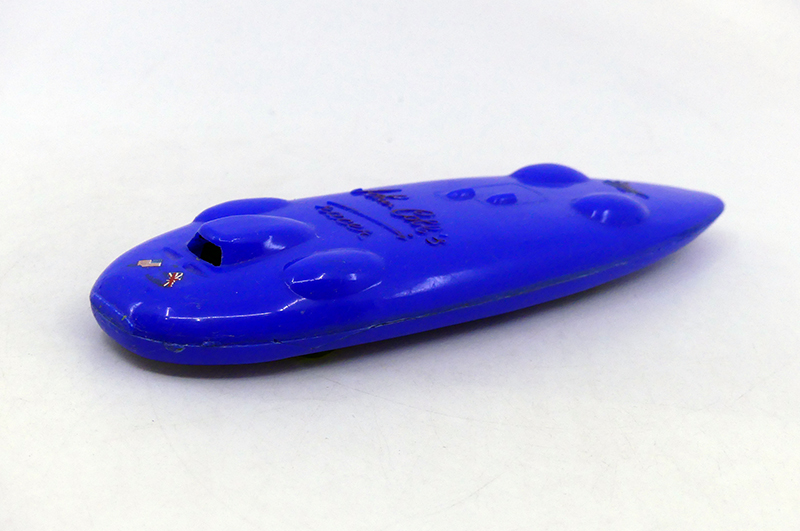
modèle en vente cette semaine : Kabo – Railton auto de record Mobil
Also on sale this week