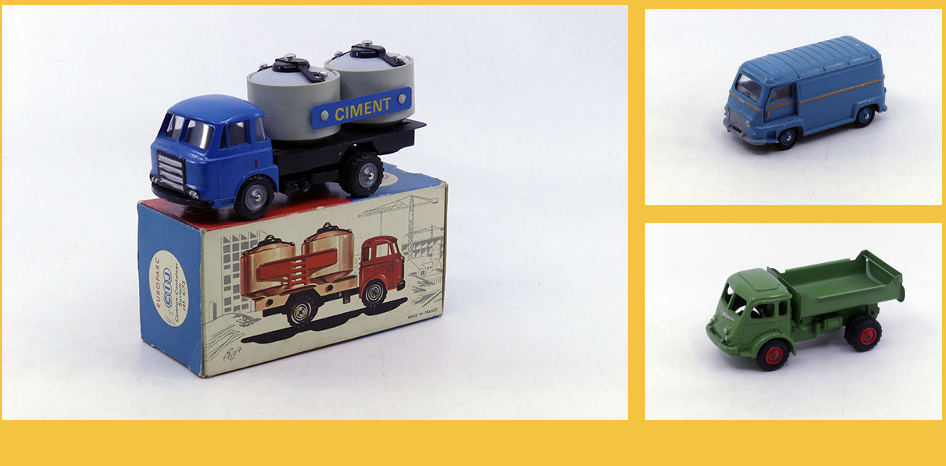
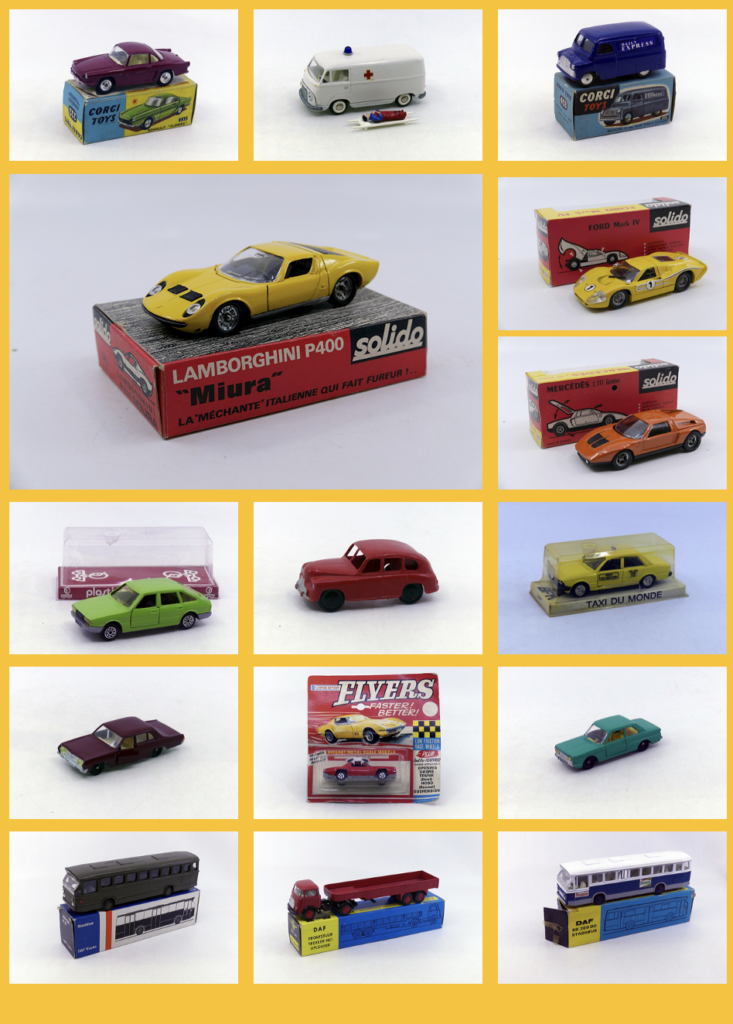
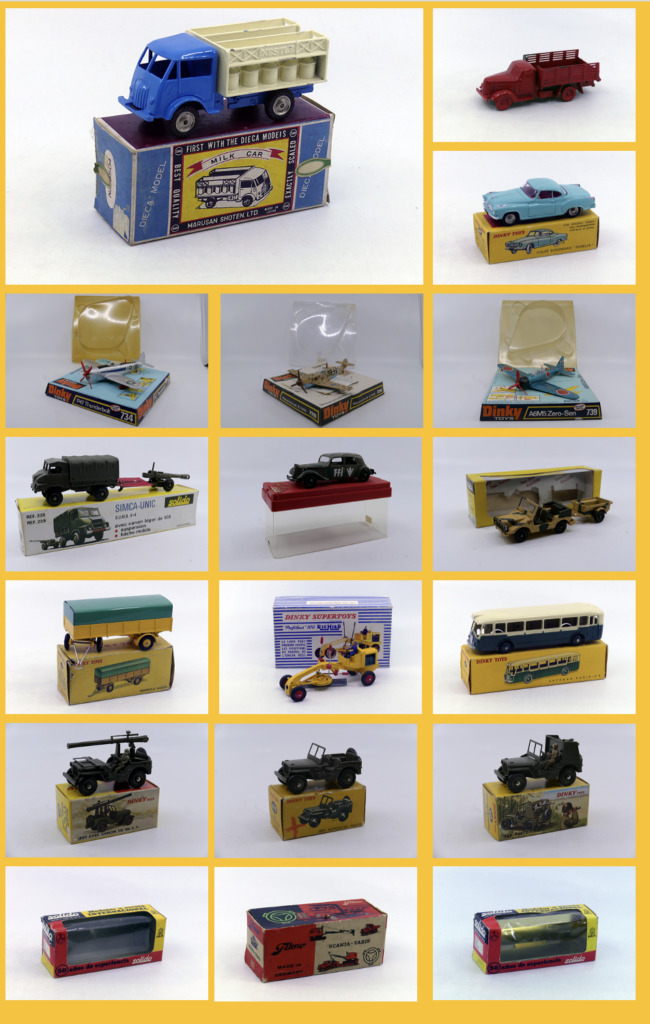
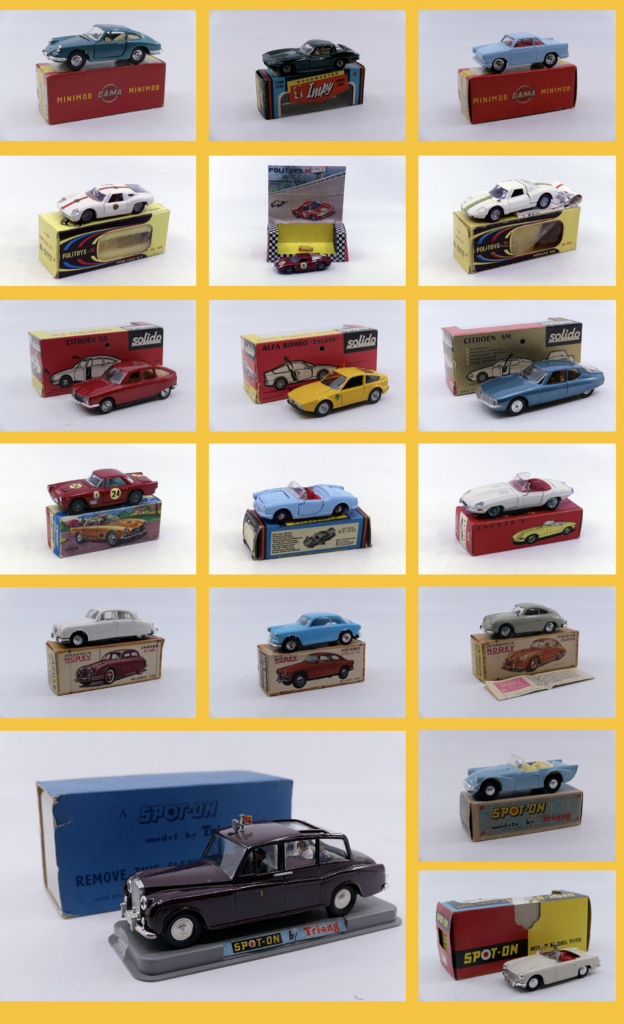
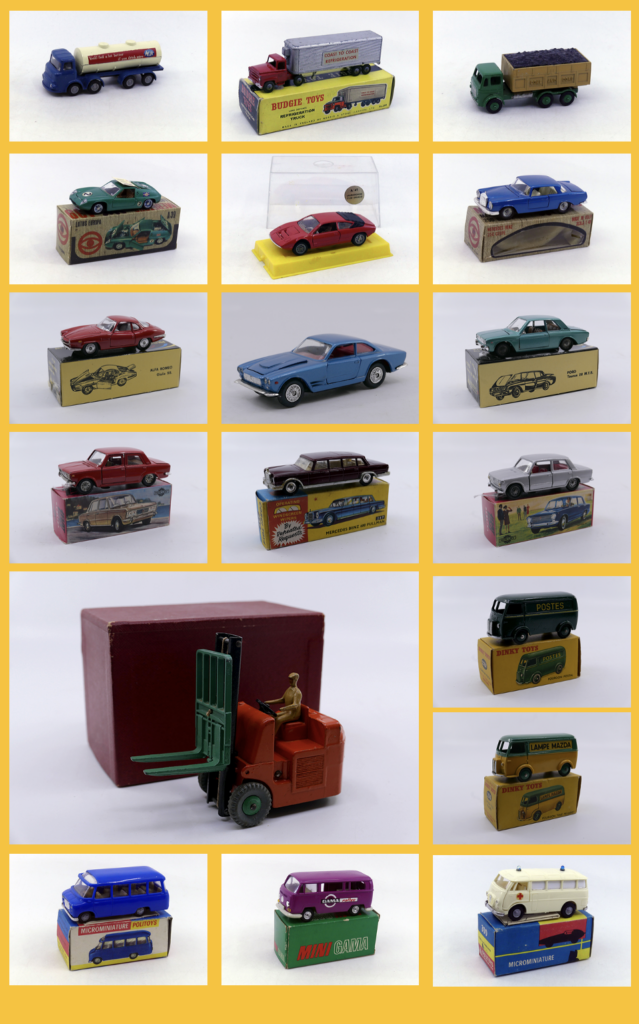
Discover a selection of models that will go on sale on our website this week, from tomorrow, Monday, September 28, through Thursday, October 1, 2026.
AUTOJAUNE COLLECTION
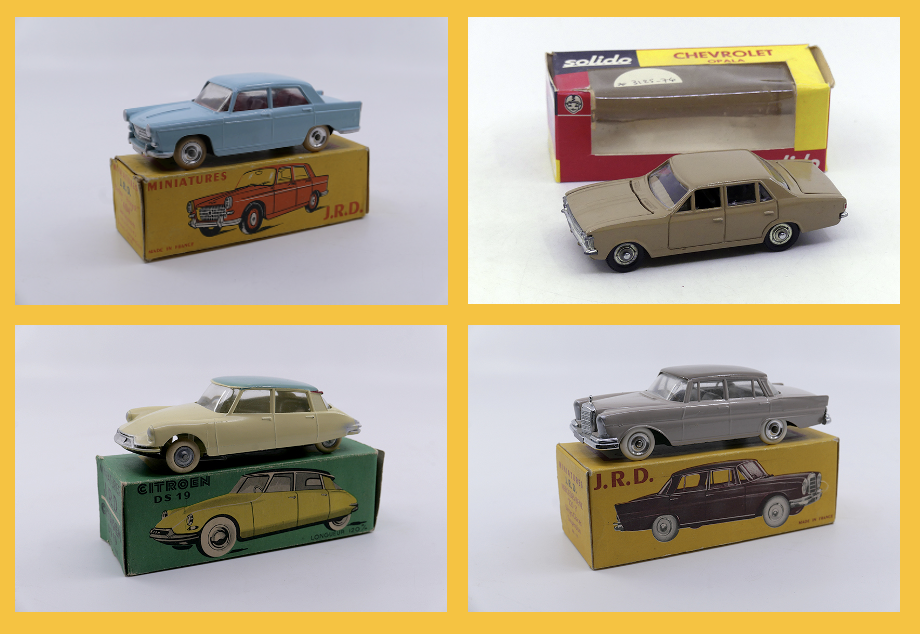
en vente cette semaine: JRD – Peugeot 404 berline 151 – Solido Brosol – Chevrolet Opala 9 – JRD – Citroën DS19 116 – JRD – Mercedes 220SE berline 153
I remember...
…from the recent newsletter where I mentioned the anecdote about Claude Thibivilliers and his annoyance regarding the prevalence of the color red in the Dinky Toys range. I was reminded of this when seeing the splendid drop-side GMC scheduled for this week—which is red… and yellow—and which was produced under his direction.
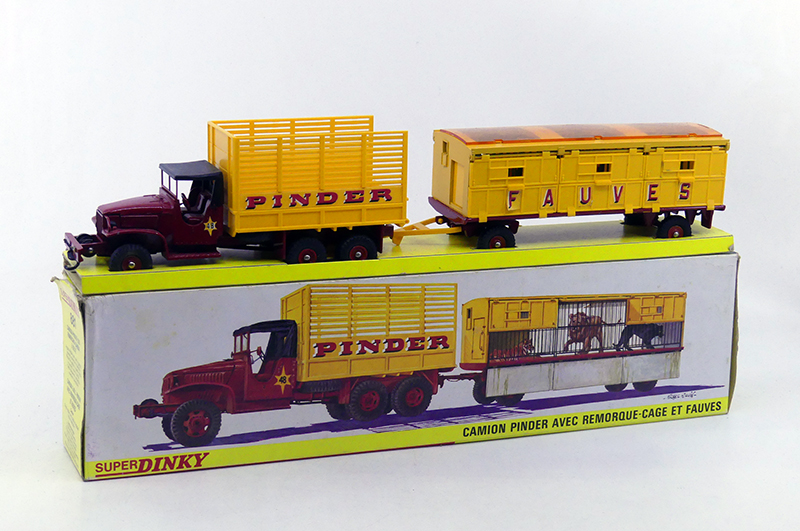
modèle en vente cette semaine : Dinky Toys France – GMC camion caisse et remorque fauve Pinder 881
This truck was used to transport part of the big top canvas and to raise the tent poles using a winch mounted on the front of the body.
The illustrator, Mr. Jouin, actually depicted this lifting winch in the catalog illustration. It appears that the feature was originally planned but later abandoned; it does not appear in the drawing on the box.
It is also likely that Mr. Jouin used a photograph of the actual vehicle for the initial illustration. This model is a faithful reproduction of one of the trucks from that famous circus.
Even the license plate is accurate to the real vehicle. Mr. Badaroux, from Meccano’s design department, cherished fond memories of the trip to Tours, where the circus spent the winter. While there with a colleague, he took photos and notes and, most importantly, measured the vehicle’s dimensions. He told me that the wife of the Meccano director at the time had also wanted to accompany her husband, as she was fascinated by the unique world of the circus.
Mr. Badaroux had previously handled the reproduction of the military version. For that model, a shorter trip to a scrapyard in Le Bourget—in the dead of winter—had sufficed. He remembered the freezing cold that had made the work difficult.
The Pinder circus colors—red and yellow—pleased the management… and Claude Thibivilliers. It must be said that it really stands out in a shop window display.
It is a magnificent piece. Some collectors criticize the use of plastic for the body and the cage shutters.
At the time this product was made, that material was ubiquitous; production costs could not be kept down without using it. If you compare them with the Chipperfield’s Circus models produced by Corgi Toys during the same period, you’ll find that this material was widely used there as well. Yet, I have never heard a Corgi Toys collector take issue with it. It seems Dinky Toys collectors have a genuine aversion to this material. I appreciate the faithful reproduction of the two models made by Dinky Toys France. There is also a Peugeot 404 with a caravan.
These are true scale models. Corgi Toys models, on the other hand, are rather fanciful; I would classify them more as toys. Fine toys, certainly, but toys nonetheless. I have always appreciated the fact that every model produced by Dinky Toys was a reproduction of a real vehicle. That is a plus in my eyes as an amateur modeler.
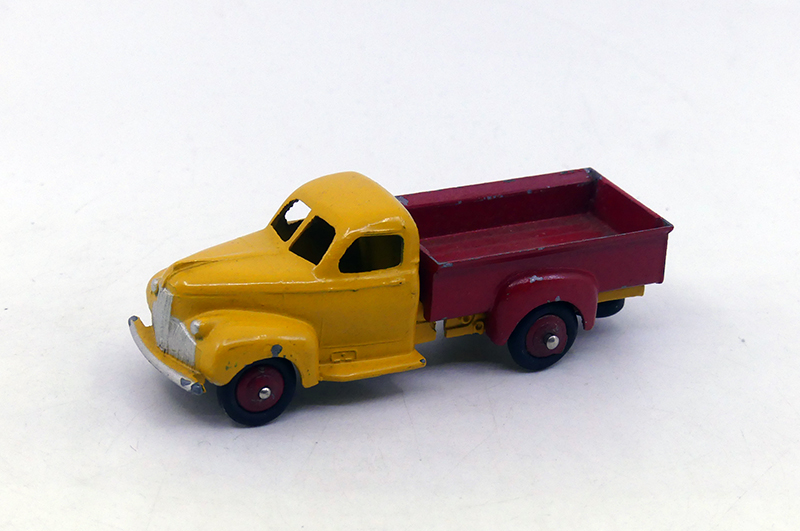
modèle en vente cette semaine : Dinky Toys France – Studebaker camion pick up 25p
As it happens, this same red-and-yellow color scheme appears on the Studebaker pickup. Here, too, this classic Dinky Toys France model is an aesthetic triumph.
One must view this model in the context of the post-war era and the drabness of the times. It is the kind of color scheme that brightens up a Thursday afternoon—a day off school back then, dedicated to playing with toy cars alongside one’s friends.
I have a soft spot for this color combination, which also appears—albeit in smaller proportions—on the original Richier road grader, another model that was also produced.
fans of variants
Dinky Toys collectors—specifically those who prize variations—share the same habitual behaviors.
At vintage toy fairs, they feverishly (and with varying degrees of care) open the box flaps to check which specific version of the model lies inside. Certain details on the box offer immediate clues: the presence or absence of the “Meccano Tri-Ang” mark, the box’s color shade, the diamond-shaped cutouts on the sides, and so on.
This week, we are featuring two models that stand out from the ordinary—variations sure to brighten any collector’s day.
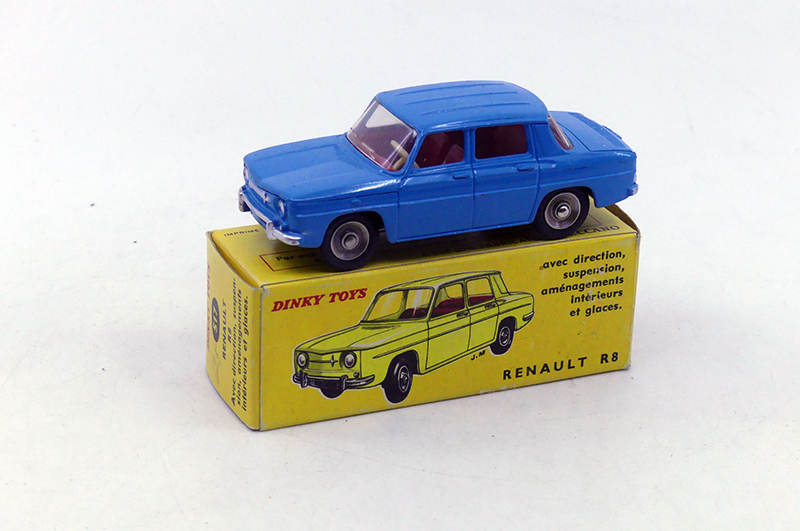
It would be interesting to calculate the ratio of Renault R8 boxes opened versus those containing the version fitted with large-diameter wheels; that is precisely how the rarity of a variation is measured.
modèle en vente cette semaine: Dinky Toys France – Renault 517
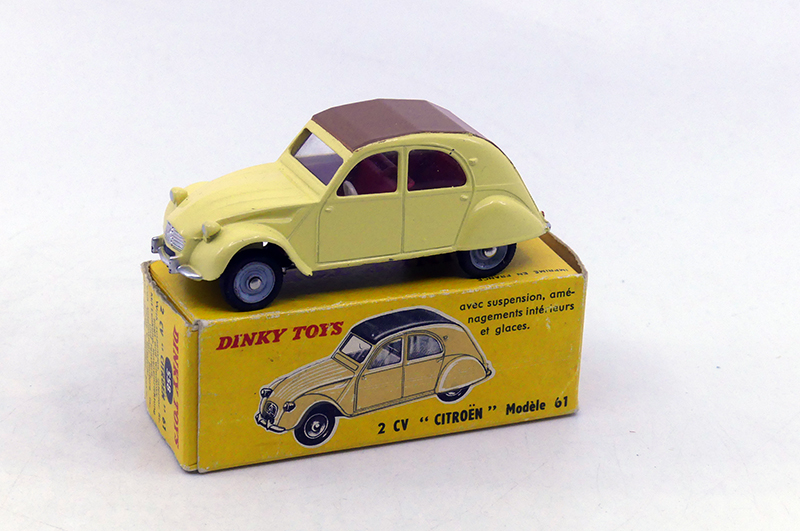
The Renault 8 and the Citroën 2CV Azam—both fitted with large-diameter wheels—are uncommon finds.
These wheels do not particularly flatter the models, yet I appreciate them for their rarity and the stories behind them. One might surmise that Dinky Toys sought to streamline production by standardizing the wheels used across its models.
It is also possible that these wheels served as a temporary substitute following a stock shortage of the small-diameter steel wheels originally fitted to the models, filling the gap until the new aluminum wheels became available.
Naturally, this short-lived variant commands a premium price due to its rarity. When displayed alongside the standard version, this variant certainly sparks curiosity.
modèle en vente cette semaine : Dinky Toys France – Citroën 2cv Azam 61 558
inondé
Time has passed. A few years ago, a large batch of Dalia miniatures came onto the market, effectively flooding it. These Spanish miniatures had originally been acquired by Michel Claverie, who had crisscrossed Spain buying up toy store stock during the 1970s. My father purchased some from him in the 1980s. These miniatures are interesting for several reasons. Spain had protected its borders and imposed heavy import duties that made importing goods—especially toys—virtually impossible. The goal was to encourage domestic manufacturing and, by extension, local employment. Foreign toy manufacturers adapted to this situation by setting up production facilities in Spain. Solido struck a deal with Dalia in Barcelona; the two companies’ management teams were linked by family ties. For us collectors, this was a boon, as it allowed us to acquire variants based on original Solido models but featuring unique colors and specifications.
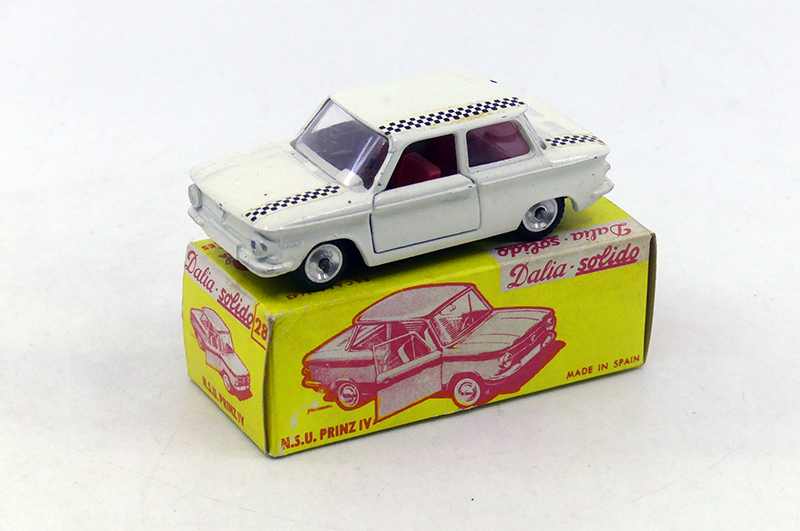
This week, we are featuring a white NSU Prinz with a black-and-white checkered pattern that evokes the world of motor racing—the kind of livery that was popular in the 1960s. The chassis bears the “Dalia-Solido” engraving.
modèle en vente cette semaine : Dalia – NSU Prinz IV 28
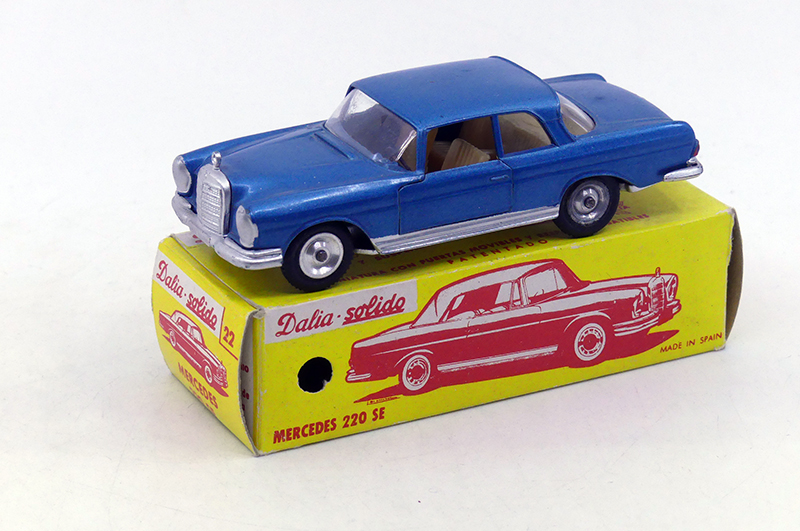
The second model is an elegant Mercedes 220SE.
This color variant was also produced in France; however, please note that the shade of blue differs. Another detail worth mentioning is the rear license plate, which is white—the color used for plates in Spain at the time. Finally, the boxes bear the “Dalia-Solido” marking. The presence of the box is important to me.
modèle en vente cette semaine : Dalia – Mercedes 220se 22
My top pick: these two Volkswagen Kombis from Tekno.
This is surely the item that best encapsulates my life as both a collector and a professional. That Danish firm has been a constant companion throughout my career—more so than any other. It was to build this collection that I first headed to Scandinavia in the early 1980s. While packing for a move, I rediscovered the “wanted lists” I used to send out to Scandinavian enthusiasts before every trip.
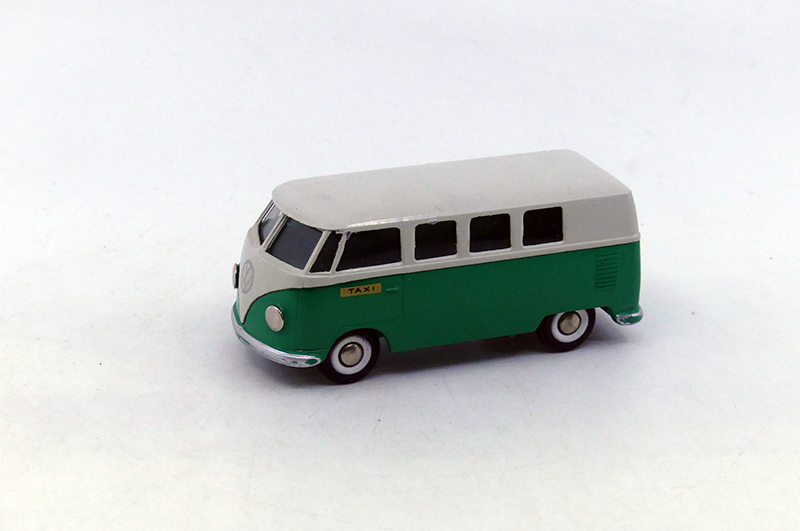
This Volkswagen range has given me plenty of challenges, but also a great deal of satisfaction. There is nothing quite like the pleasure of finding a missing model. A few weeks ago, a friend in Hamburg tracked down a version that was previously unknown to me. I have no doubt there are still more out there to be found. On the flip side, however, the market has been flooded with fakes. This week, we have two fine examples. One is a stunning minibus-taxi version featuring a subtle, harmonious combination of pearl grey and green. While many color combinations exist, the one offered here is truly superb.
modèle en vente cette semaine : Tekno – Volkswagen Kombi bus taxi 407
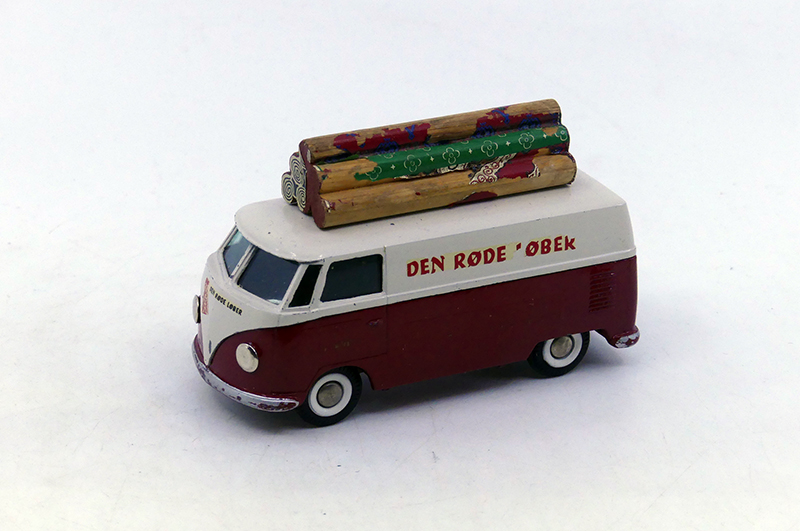
The second model is one of the finest in the series. It bears the livery of a chain of carpet stores. Its unique design made a lasting impression on advertising vehicle enthusiasts: the roof features a display of rolled, patterned carpets—a visually striking effect. Tekno had previously produced this model using its earlier, smaller mold (reference “413”), but the 1:43 scale “405” version offered here is far rarer. Note that there is also a much less spectacular version—lacking the carpets—which is extremely rare. The vehicle used to drive the streets of Copenhagen, much like the version featuring a figure perched on the roof in E. Sorensen livery. If one were to collect just one series of vehicles, this line of advertising Volkswagens would be the one to choose.
modèle en vente cette semaine : Tekno – Volkswagen Kombi Den Rode Lober 405
Also on sale this week

 Français